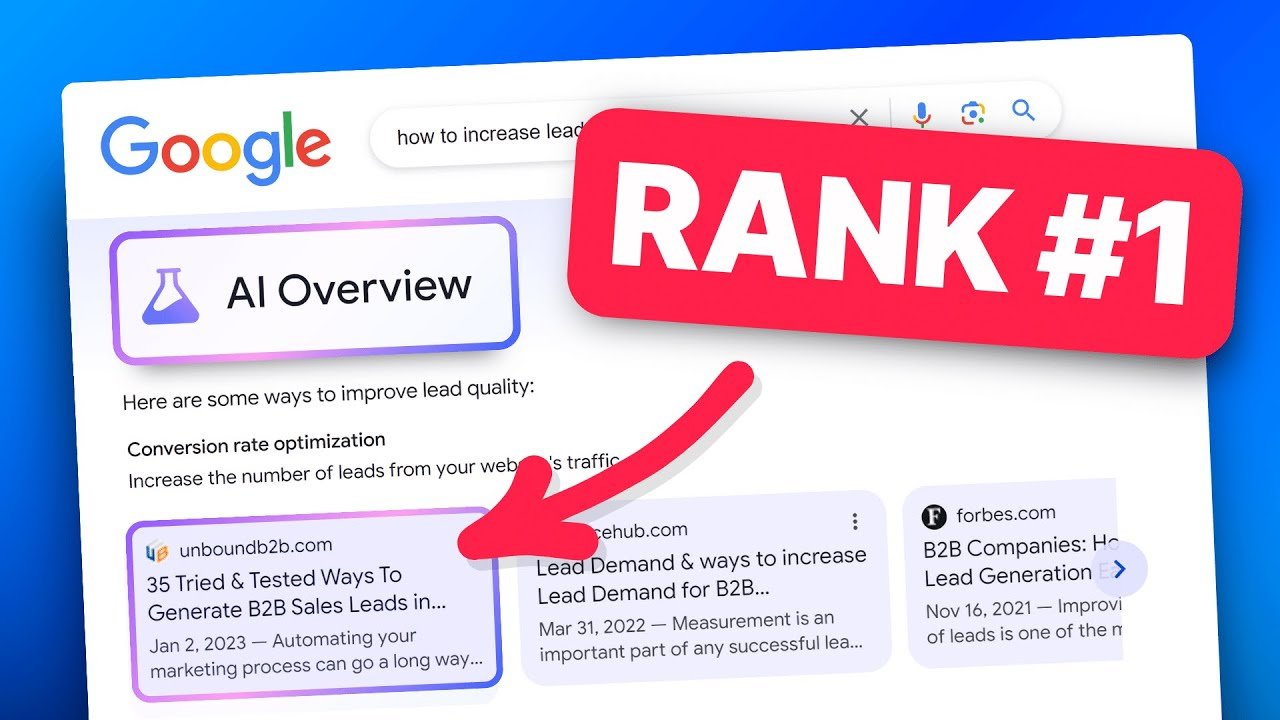
If you run a business in Dubai or elsewhere in the UAE, more of your customers will see an AI-written answer before they see a list of websites. Knowing how to rank in Google AI Mode Dubai searchers can find you in is now part of ordinary search work. The goal is to be one of the businesses the answer names, summarises or links to.
This guide covers what changed recently, what earns citations, how to check whether your brand appears, and where AI Mode ads stand for the UAE. It is written for SMEs without a large team or budget.
What changed in October, and what did not
Two Google announcements matter here.
- 15 October: Google changed how links appear inside AI Overviews and AI Mode. The details of the display will keep shifting, so we won't build a strategy around one layout. What matters is that links to sources sit inside the answer, and your pages need to be among them.
- 28 October: Google expanded ads in AI Mode to 10 more countries. The UAE was not on that list, and Google has not announced AI Mode ads for the UAE yet.
For UAE businesses, this means visibility in AI answers is, for now, organic only. You cannot buy your way into AI Mode here. You earn your place through the quality and clarity of your content, which is why this is a good time to prepare.
How to rank in Google AI Mode Dubai businesses can actually control
No one outside Google can promise a ranking inside an AI answer, and anyone who guarantees one is guessing. Google's own guidance for site owners says the fundamentals of good SEO still apply to AI features: pages that are indexable, useful, and written for people. So the practical approach is to make your site easy to understand, easy to quote and easy to trust.
This is the core of what people now call generative engine optimization (GEO). In Dubai, GEO is mostly strong SEO plus clearer structure, consistent business data, and content in the languages your customers use. If you want the wider foundation first, our SEO service covers it.
1. Build one clear page per service
AI systems answer specific questions such as "Who does VAT registration help for a small company in Dubai?" or "Which agency manages Noon listings?" A single "Services" page with a list of bullet points rarely answers them. A dedicated page for each service usually does.
For each service page:
- State what the service is in the first two sentences, in plain language.
- Say who it is for and where you operate (Dubai, Abu Dhabi, Sharjah, all UAE).
- Explain how it works in steps, and what the customer needs to provide.
- Give real pricing guidance if you can, even as a "starts from" range or a description of what changes the price. Pages that avoid every concrete detail are harder to quote.
- Add proof you actually have: licences, certifications, years in operation, named partnerships you are authorised to mention.
- Finish with a clear next step such as a form, WhatsApp number or booking link.
Avoid vague claims like "we are the best in Dubai". An AI answer has nothing to extract from them. A sentence like "We install and service split AC units for apartments and villas in Dubai Marina, JVC and Downtown" gives it something it can use.
Technical basics still decide whether a page can be used at all. It should load fast on mobile, be crawlable, have a clean heading structure and not hide its main text behind scripts or images. If your site is old or built on a rigid template, web development may be the first fix.
2. Add FAQ content and structured entity data
Customers ask AI Mode full questions, and your pages should answer them in the same form.
- Write real FAQs. Collect questions from WhatsApp chats, sales calls, emails and Google Business Profile messages. Answer each in two to four direct sentences, then add detail below if needed.
- Keep answers on the page visible. Content should be readable by users and not hidden only in markup.
- Use schema markup where it fits. Organization, LocalBusiness, Service, Product and FAQPage markup helps machines read your page accurately. Treat it as a way to clarify, not a ranking trick. Make sure the markup matches what is on the page.
- Keep your entity data consistent. Your business name, address, phone, trade licence name, opening hours, category and service areas should match across your website, Google Business Profile, LinkedIn, social profiles and any directory listings. Inconsistent data makes it harder for Google to be confident about who you are.
An "About" page that states who owns the business, what it does, where it is based and when it started is more useful than most owners expect. It anchors your brand as a recognisable entity.
3. Publish in Arabic and English, properly
The UAE is a bilingual search market. People search in English, in Arabic, and often switch between the two depending on the product, the device and who they are asking for.
- Write Arabic pages natively. Machine-translated Arabic reads badly and rarely matches how people search. Have a native speaker write or edit it.
- Give each language its own URL and link the versions with hreflang tags, so Google can serve the right one.
- Match local vocabulary. Use the terms people actually say in the Gulf, plus the English terms they mix in. Name the neighbourhoods and emirates you serve.
- Keep facts identical across languages. Prices, services, hours and contact details should not differ between the English and Arabic versions.
Fewer businesses publish good Arabic content than you might expect. That gap is an opportunity for SMEs willing to do it carefully.
4. Earn mentions beyond your own website
AI answers draw on more than your site. Reviews, directories, press, industry associations, YouTube and marketplace listings all help establish that a business is real and relevant.
- Ask happy customers for Google reviews that describe the service and area, not just a star rating.
- Keep Google Business Profile
Want this working for your business?
Get a free audit of your site and a clear plan from our senior team.
Get your free site audit